
Hannah Arendt. Kritische Gesamtausgabe, Wallstein Verlag (ed.), 2018-. https://hannah-arendt-edition.net/home (Last Accessed: 10.03.2026). Reviewed by  Martina Chiara (University of Bologna), chiara.martina3@studio.unibo.it. ||
Abstract:
The Hannah Arendt Kritische Gesamtausgabe is a critical edition aiming to provide a comprehensive and accurate collection of the works of Hannah Arendt. As an ongoing project, it seeks to give scholars access to both published and unpublished writings, with new materials being made available over time. The project is conceived as a hybrid edition, combining both print and digital publications. It is a fundamental resource for the Arendtiani studies, enriching the corpus with unpublished materials from international archives. The review assesses the project against Scholarly Digital Editions (SDE) criteria, highlighting its academic importance and limitations. The edition represents a significant contribution to the dissemination and understanding of Arendt’s thinking, promoting a dialogue between tradition and innovation.
Opening the Review
1Who was Hannah Arendt?
“The world of Hannah Arendt, one of the most important and controversial figures in 20th-century thought, a brilliant political thinker who refused to consider herself a philosopher, a woman who never saw being born feminine as an obstacle, a Jew attacked as an anti-Semite, an intellectual famous for her polemical style and admired for the rigor of her arguments.”(Boella 2020, 4)
2The question may seem simple at first glance, but it is far from obvious. Answering it requires delving into multiple aspects of Arendt’s life and thought. Her personal history, especially her experience of exile and the impact of World War II1, played a crucial role in shaping her ideas. Additionally, the question invites reflection on an important distinction Arendt made: the difference between the ‘who’ and the ‘what’ of a person.
3Arendt defines the ‘who’ as the unique identity of an individual, shaped by their actions and relationships, while the ‘what’ refers to their objective characteristics, such as their social role or achievements. Reflecting on Arendt through this lens, we see how the philosophical concepts she developed to analyze the human condition also help us understand her identity. The ‘who’ dimension of Arendt is reflected in her life, lived through teachings, lectures, poems, letters, and friendships, a representation of her way of interacting with others and living the world. At the same time, the ‘what’ allows us to analyze her works, her role as an intellectual, and the lasting impact of her thought.
4It thus becomes evident why the Hannah Arendt Kritische Gesamtausgabe (hereafter HA.CW.CE, an abbreviation derived from the project’s English title) holds such significance. The HA.CW.CE aims to offer an authoritative and cohesive collection of Arendt’s writings in a hybrid edition, making them more accessible and usable for scholars, students, and those engaged with Arendt’s philosophy.
5This project aims to offer a comprehensive platform to explore both the ‘who’ and the ‘what’ of Arendt, her unique personal identity and her intellectual contributions. A critical digital edition allows us to delve into the ‘who’ of Arendt by providing access to a wide range of materials beyond her published works. These resources offer an intimate glimpse into her life, helping us better understand the personal experiences and relationships that shaped her thinking. At the same time, the edition presents her intellectual legacy, offering a structured and detailed presentation of her ideas (the ‘what’).
6The edition will serve as an invaluable resource, shedding light on the intellectual depth of Arendt’s contributions and ensuring that her thought continues to resonate in contemporary debates on politics, ethics, and human freedom.
7The editorial team of the HA.CW.CE comprises distinguished scholars and experts dedicated to the comprehensive study of Hannah Arendt’s works. Project coordination, handled by Hannah Gerlach and Dr. Ingo Kieslich, involves the overall management and coordination of the initiative. The technical infrastructure and realization are managed by a team including Dr. Jan Brase, Fabian Etling, Dr. Brigitte Grote, Prof. Dr. Wolfram Horstmann, Stefan Hynek, and Dr. des. Christoph Kudella. A substantial number of scholars have contributed significantly to the project.2 The HA.CW.CE received long-term funding from the German Research Foundation in 2020, highlighting its significance in scholarly circles. Financial resources have been crucial for sustaining the extensive research infrastructure and ensuring the project’s longevity.
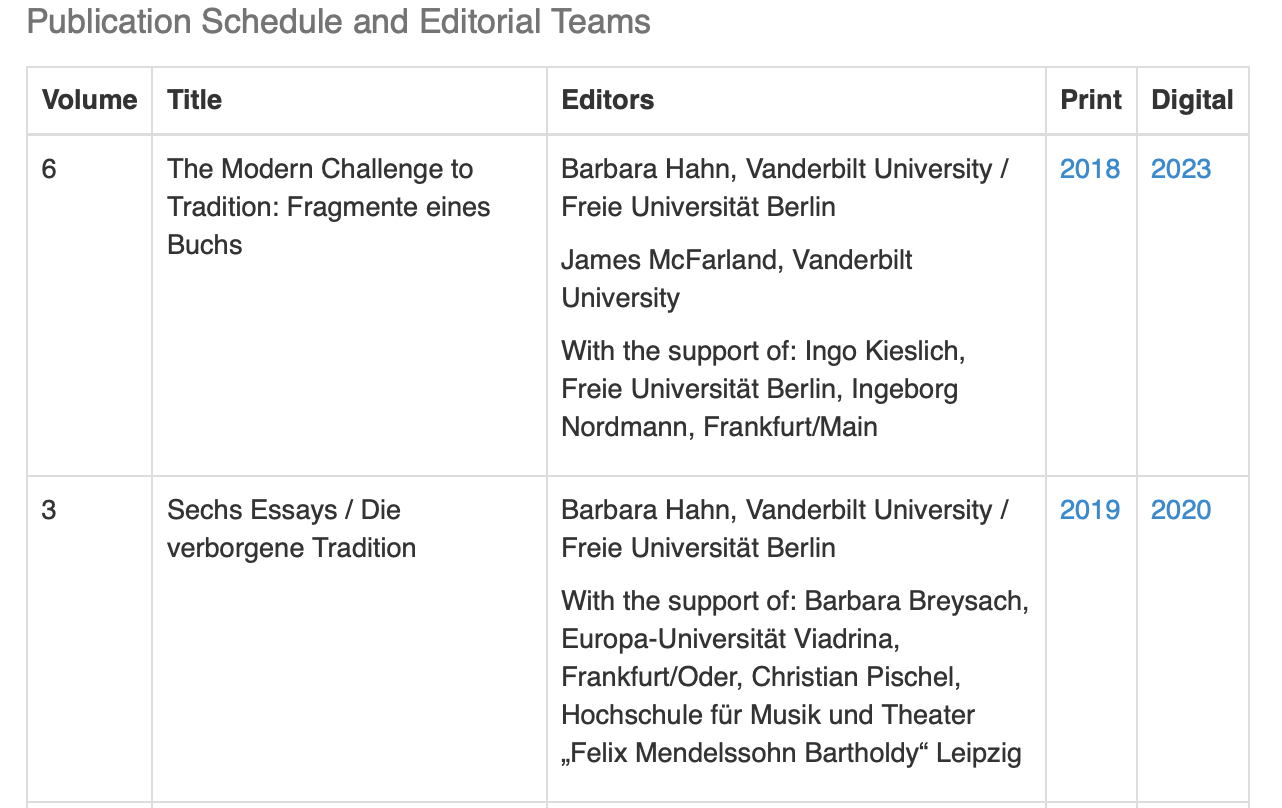
9This is a strong point of this edition as it provides a detailed overview of the release dates for print and digital versions, allows users to plan their reading and keep track of the available parts of the edition.
Subject and Content of the Edition
10The HA.CW.CE employs a hybrid approach3 that integrates both printed and digital formats, leveraging the strengths of each. The print edition offers a carefully edited, annotated version of Arendt’s works with critical commentary, providing a stable and permanent scholarly resource. In contrast, the digital edition enriches this by offering interactive features, such as diplomatic transcriptions, facsimiles, and XML-TEI documents, with all textual variants and editorial markup visible for direct analysis. This methodology creates a comprehensive environment for studying Arendt’s works, allowing users to explore and analyze texts in multiple formats. The printed edition maintains the tangible dimension of a text, while the digital version offers dynamic features such as advanced search tools, interactive collation, and global access.
11HA.CW.CE emerges as a resource of primary importance for Arendtian studies and the humanities in general. The digital edition will include approximately 21,000 pages of material, gathered from archival institutions such as the Library of Congress (Washington, D.C.), the Deutsches Literaturarchiv (Marbach), and Bard College (New York). These holdings comprise both already known documents and a substantial number of previously unpublished or unstudied materials, such as typescripts, corrected proofs, and handwritten notes, identified within these and other international collections. This archival breadth significantly expands the reference corpus and deepens the potential for scholarly inquiry.
12The selection criteria for inclusion in the edition are clearly defined:
- Works authored by Hannah Arendt, whether published or unpublished;
- Documents that attest to the multilingual nature of Arendt’s production (German, English, French, Yiddish).
13The objective is to provide a representative and comprehensive collection that reflects Arendt’s intellectual contributions and the plurality of her linguistic and cultural contexts. The goal is to include a representative set of works and documents covering different aspects of Arendt’s thoughts, intellectual productions, and the expansion of the corpus through the discovery and inclusion of new materials. The inclusion of unpublished works is particularly significant for current and future research, offering fresh insights and previously unavailable information.
14The texts in HA.CW.CE are presented in the original language, written by Arendt, allowing scholars to examine the material in its original form. In addition, the project provides a range of tools, including navigation tools, full-text searches and visualization tools, which facilitate the discovery and analysis of the contents. The project promises that the various thematic complexes will be initially published in book format by Wallstein Verlag in Göttingen. Then, one year after the print publication, they will be made globally and freely accessible. This will take place through the web portal managed by the Freie University of Berlin. HA.CW.CE aims to publish a wide range of materials such as complete texts, images, facsimiles, diplomatic transcriptions, digital markup, commentaries, bibliographies and metadata. The digital edition offers an in-depth view of Arendt’s thinking and writing processes through a variety of sources, allowing scholars to examine her work comprehensively.
Technical Implementation and Infrastructure
15The HA.CW.CE employs a well-documented technical infrastructure (see “Technical Documentation” on the website). All edition data, including TEI-encoded transcriptions, editorial annotations, indices, and facsimiles, is stored in the TextGrid Repository, allowing for structured storage and long-term preservation. All data is encoded in XML-TEI according to the Guidelines of the TEI Consortium, ensuring interoperability with established scholarly standards. Editing is carried out using Oxygen XML Editor, enhanced with custom frameworks and the ediarum.jar library for indexing, while client-side editing is facilitated through specialized add-ons.
16The web application is built on the eXist-db XML database using the SADE framework, which forms the core of the edition’s architecture. In line with principles of sustainability and modularity, the portal is being restructured to ensure a strict separation of backend and frontend and the development of edition-specific front-end components as custom web components based on open standards. A RESTful API is currently under development in accordance with the OpenAPI standard, enabling automated reuse of edition data by third parties. The publication of the project’s source code under an open license is also in preparation, according to the information on the website.
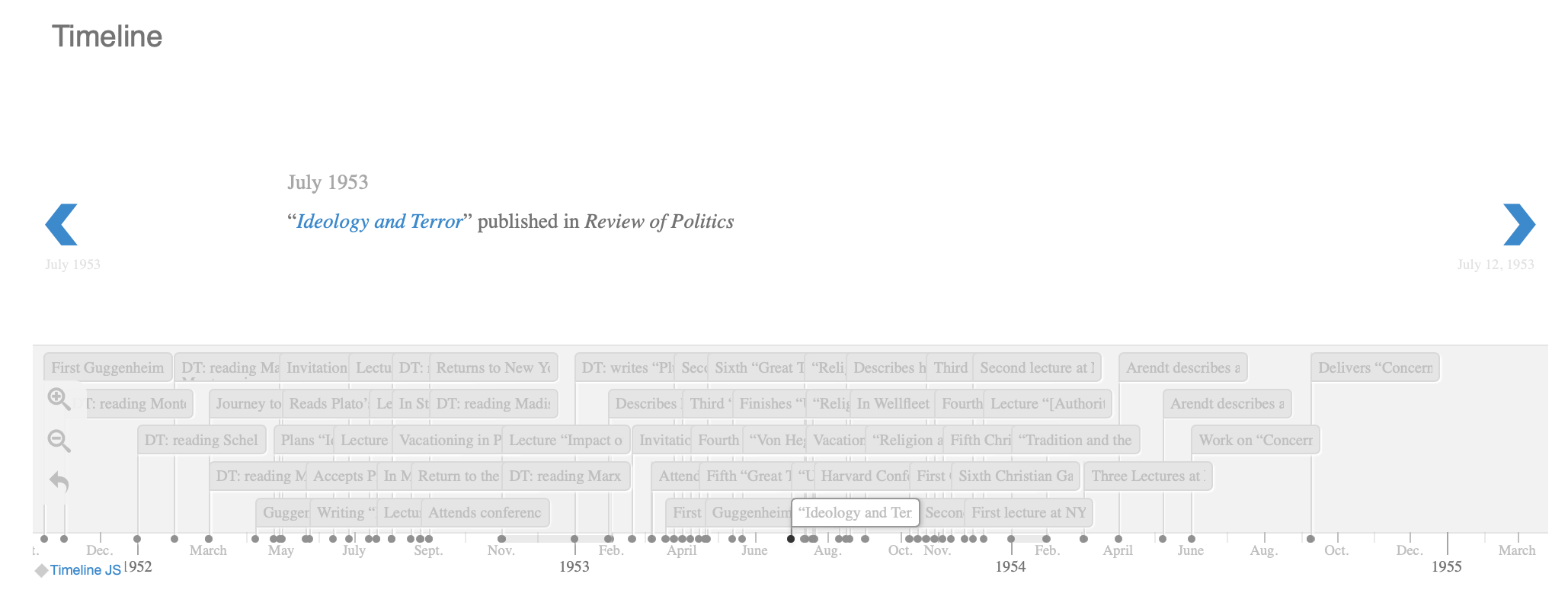
17On the user-facing side, the interface combines Bootstrap for layout and design, OpenSeadragon for high-quality facsimile presentation, LERA for text comparison, Voyant Tools for corpus-based text analysis, and Timeline.js for interactive visualizations of events. The timeline displays in chronological order key events in Hannah Arendt’s life and work, providing a valuable tool for analyzing the temporal and contextual dimensions of her production.
18Authority data in the person index is enriched with GND identifiers, ensuring stable referencing of persons. In accordance with the FAIR principles (Findable, Accessible, Interoperable, Reusable) (Wilkinson et al. 2016), all third-party data is transparently credited, and the use of open licenses (LGPLv3, MIT, BSD, CC-BY, CC0) ensures reusability. At present, explicit information regarding persistent identifiers (PIDs, DOIs) and formal strategies for certified long-term archiving has not yet been provided.4 The adoption of persistent identifiers and long-term archiving strategies could be considered to strengthen the citation, interoperability and long-term sustainability of the edition.
Aims and Methods
19The HA.CW.CE provides differently edited versions of Hannah Arendt’s texts within a single edition, each serving distinct scholarly purposes. A critically edited version presents a single, edited version of the text, accompanied by detailed introductory material, explanatory notes, and textual annotations. On the other hand, the diplomatically edited version preserves the original manuscripts in their authentic form, showcasing features like erasure marks, insertions, and other specific characteristics of the original material. But how does the possibility of comparing the critically edited text and the diplomatically edited text enrich the understanding of the work of Hannah Arendt? How does the perception of the work change through a comparative reading of both versions of the texts?
20The tools enrich the perception of the work by providing a balance between the clarity and readability of a critically edited text and the fidelity to the original of a diplomatically edited text. They allow readers to immerse themselves in the author’s thinking and creative process in a more complete way, understanding both the result and the intermediate stages of its processing. These tools are particularly useful for tracking the changes the author made over time, offering valuable insight into their process of revising and refining the text.
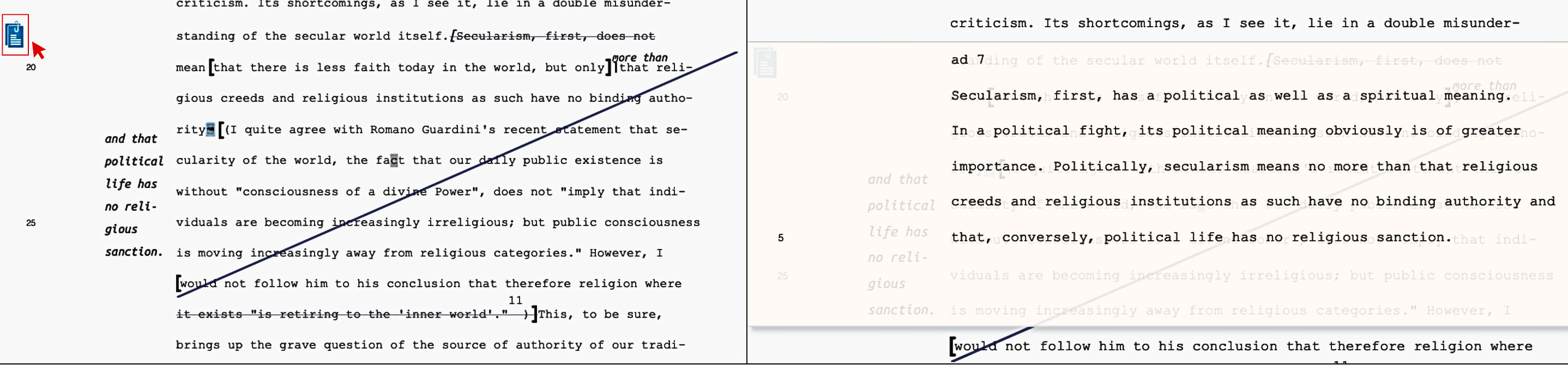
22As Wim Van Mierlo observes, “where editing and curating overlap is in the coincidence of their respective creative-critical process” (Van Mierlo 2020). Editorial tools not only preserve the authenticity of the original text but also offer a critical lens through which the reader can engage with the text’s development. By superimposing layers of text and allowing for an interactive examination of the author’s revisions, these tools facilitate a deeper understanding of the creative process, bridging the gap between the final work and its developmental stages. Currently, all manuscripts are available in a critical version but not all of them have yet been completed in a diplomatic version.
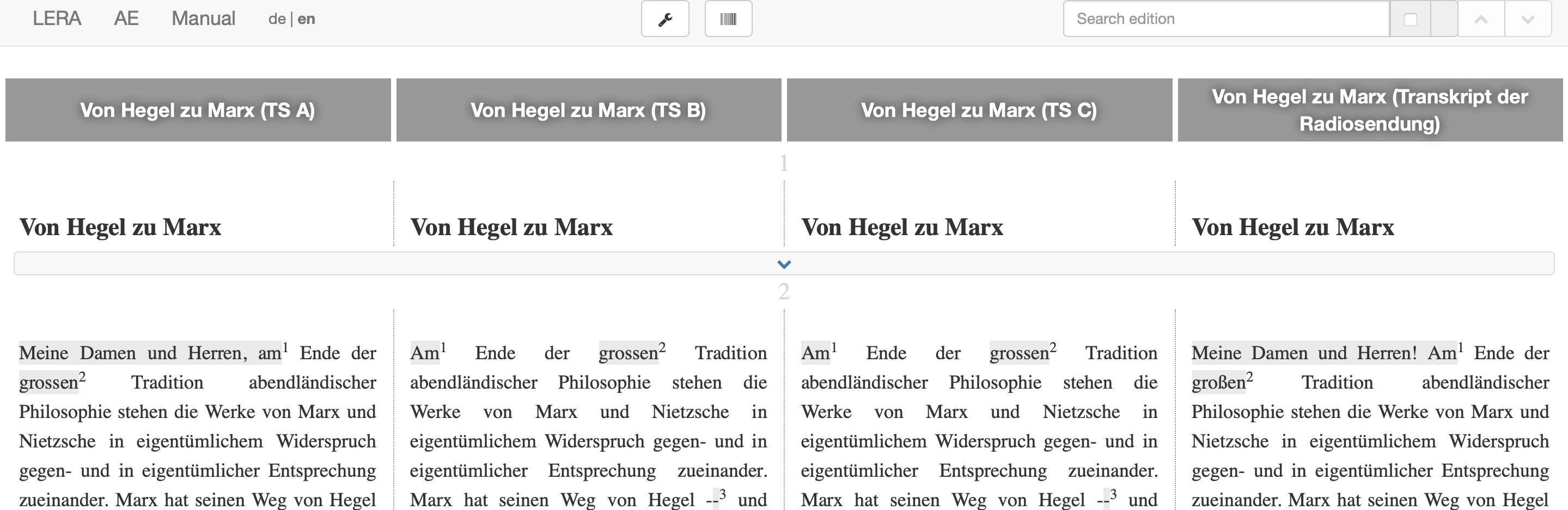
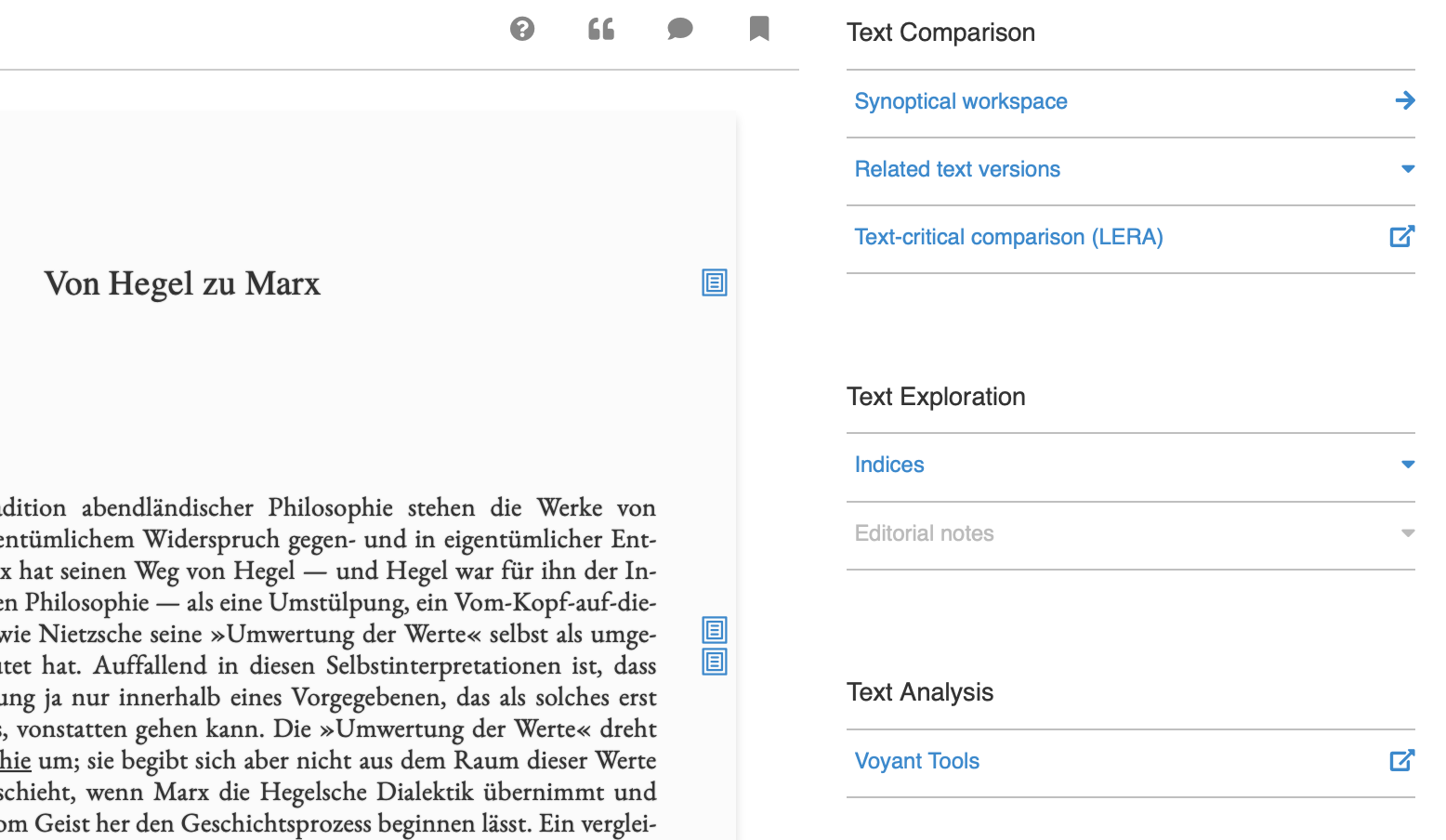
- Text Comparison, with “Synoptical Workspace”, “Related text versions” and “Text-critical comparison (LERA)”
- Text Exploration, with “Indices” and “Editorial notes” (the latter are not available).
- Text Analysis, with “Voyant Tools“.10.
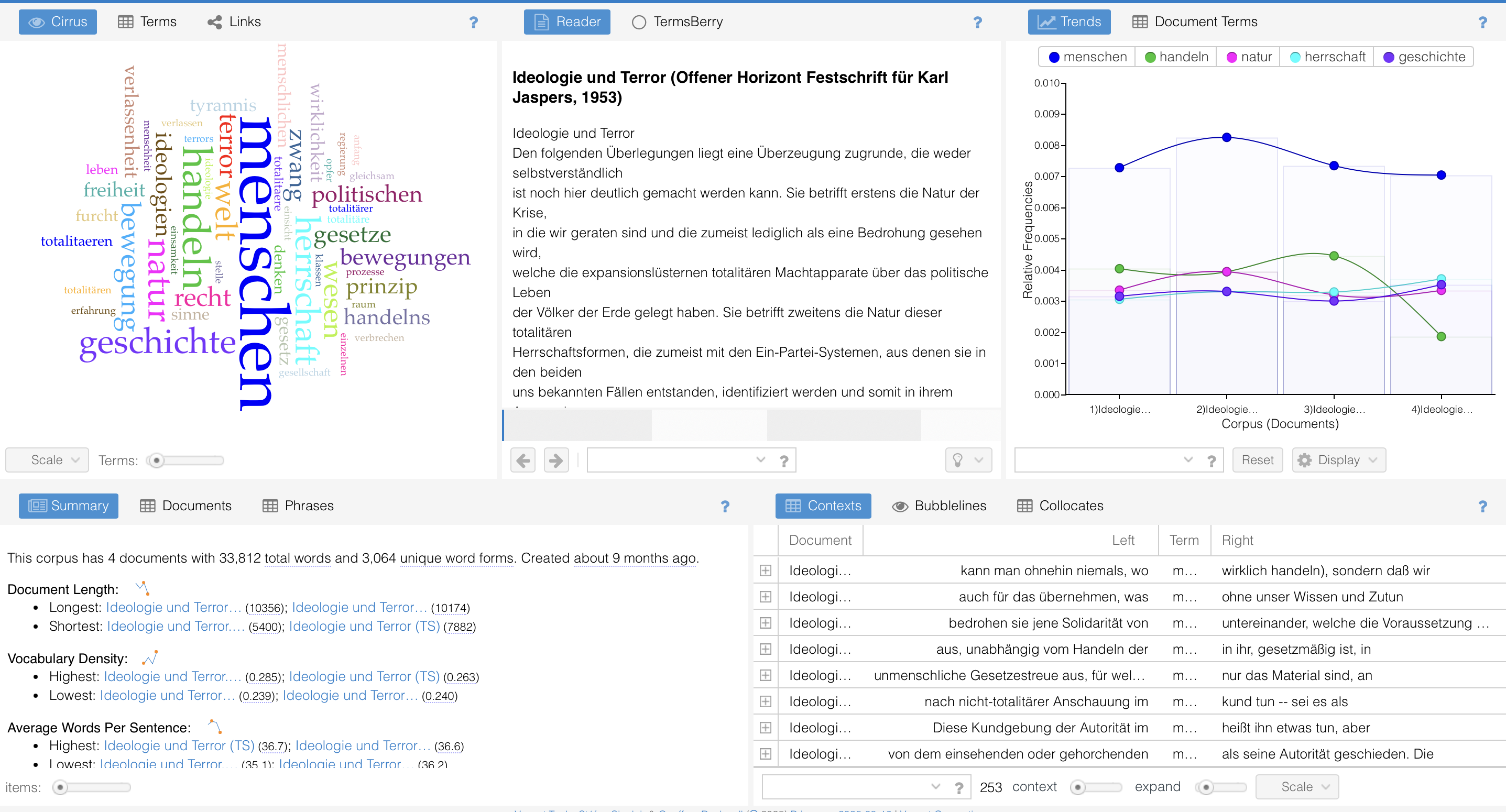
27Among the advantages, Voyant Tools allows for the analysis of words in their context through concordances and collocations, for comparing the frequency and usage of certain terms in her essays, and for exploring the evolution of Arendt’s writing style over time. Additionally, identifying co-occurrences of terms and concepts can reveal interesting semantic and thematic relationships within her works, providing numerous perspectives. Although Voyant Tools have been partially integrated into the HA.CW.CE digital platform, their application is limited12 and inconsistently documented. In addition, the website offers no clear explanation or mapping of which texts are actually available for analysis through Voyant. To enhance the user experience and usability of Voyant Tools, it would be beneficial to create a dedicated documentation section on the website. This section should provide a comprehensive list of all the digitized texts available for analysis with Voyant, along with clear indications of their availability. This would help users better understand the resources available to them and make the most of the analytical capabilities offered.
28We find supportive elements, marked with icons, such as the “Reading Aid”, which offers guides to understanding the texts and diplomatic representations, explaining the visual conventions and editorial devices used, along with citation recommendations and an editorial introduction that help guide the reader through the analysis. These features enhance the reader’s engagement with the text.
29The XML-TEI markup language allows for a detailed transcription of textual sources enriched with metadata. It would be advisable for the digital edition to ensure that XML-TEI data is easily accessible and downloadable for researchers. Currently, the digital edition only allows access but not the download of XML-TEI documents, thus representing a limitation.13 Allowing the download of XML-TEI documents would give researchers the ability to use their own software and tools to analyze and manipulate the data. For example, researchers could download the XML-TEI files and run custom scripts to extract specific information, such as tracking the frequency of particular terms across multiple texts or integrating the data with other research projects. This flexibility would allow for more advanced analysis, fostering deeper insights. Additionally, enabling downloads ensures that researchers retain control over their work, making it possible to continue their studies even if the original platform were to be discontinued or become obsolete. The edition applies a CC BY-NC-SA license, which explicitly permits sharing and adaptation under non-commercial terms. Therefore, this restriction may not be due to copyright issues alone, but could reflect an editorial decision aimed at preserving the integrity of the edition or guiding its usage within a controlled environment. The ongoing development of a public RESTful API suggests that broader reusability will be supported in the near future.
Interface, Sustainability and Usability
30The general parameters of the website are readily accessible and compiled within the “About” and “Help” sections on the main page. In particular, the subsections “Navigation” and “About this Edition” provide useful information regarding the site’s navigational structure and user flow. It is essential to read them before exploring the website to have more clarity and take full advantage of the features offered by the site.
32HA.CW.CE is accessible in both English and German. To change the language there is a button located in the upper right of the navbar with the titles “English/Deutsch”. In terms of aesthetics, the design maintains consistency and harmony, emphasizing simplicity to facilitate website navigation and enhance the understanding of its content. Users remain well-oriented, with a clear understanding of their position within the site’s structure. The strategic use of colors, predominantly blue and white, contributes to this clarity.
- Text: Provides a chronological display of documents.
- Indices: Includes the “Persons” section, an alphabetical index of individuals mentioned in or linked to specific documents, and “Events”. The “Works” and “Subjects” subsections are currently incomplete.
- About: Divided into six subsections, it offers the following information: “About this edition”, “Hybrid edition”, “Publication schedule”, “Editorial guidelines”, “Technical Documentation” and “Team”.
- Help: Provides support in navigating through sections like “Navigation”, “How to cite”, “Versioning”, “Copyright”, and “Contact”.
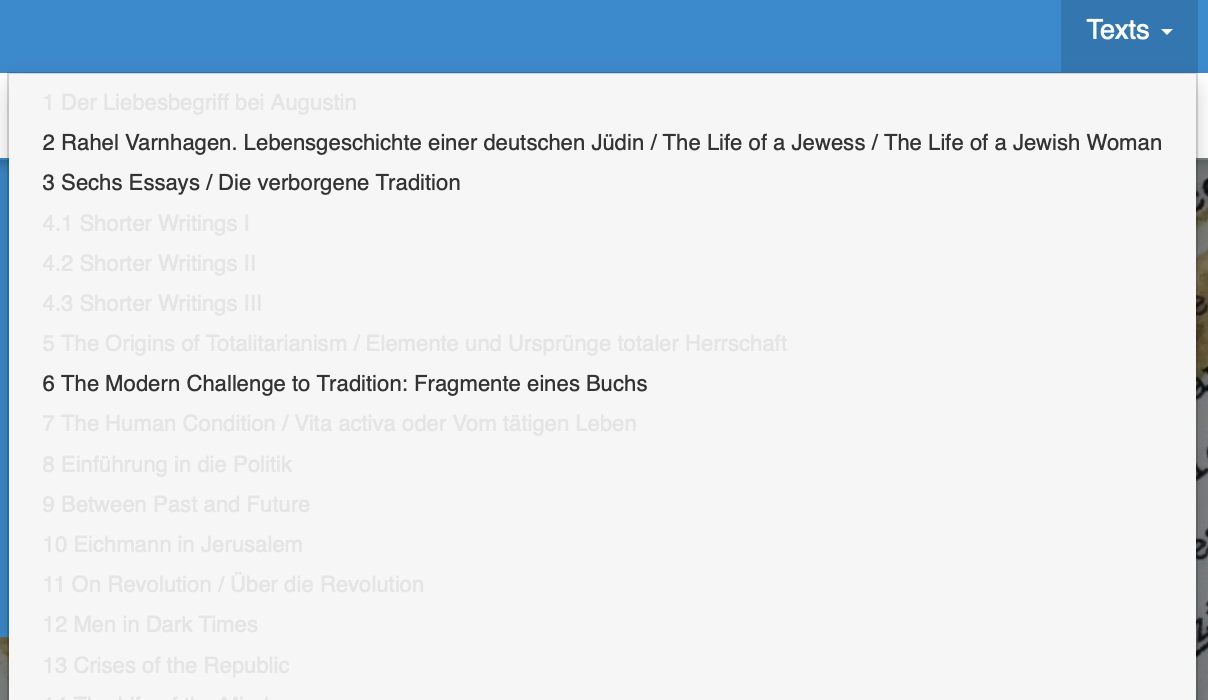
The “Text” section currently lists 17 edited volumes, but only three are available up to now (see Fig. 8). Titles and sections related to volumes not yet accessible are displayed in gray, aligning with the planned future “Publication Schedule”. However, it might be more effective to make only the completed documents visible, temporarily removing the grayed-out display for incomplete ones. This could enhance the user experience by avoiding a sense of incompleteness and potential disorientation.
34The critical edition features high-quality images of the documents, enabling users to scrutinize them carefully and verify the accuracy of the transcription in detail without compromising quality. However, it is not always possible to access the facsimile of the original document. This is a critical aspect because the handwriting, marginal notes, and original marks of the author are valuable elements for study. While the content is provided under the CC BY-NC-SA 4.0 license, which allows for non-commercial sharing and adaptation, the absence of an explanation regarding the availability of facsimiles could leave users questioning the editorial choices or technical limitations behind this decision. A strong point of the project concerns the tools for analyzing the facsimile of original documents, such as the ability to zoom in and out of images or scroll quickly. However, to further enhance interaction, it would be advisable to introduce additional features, such as text search or the inclusion of contextual information, for example, the historical origin of the document, for example in a Complete Corpus of Sechs Essays. Integrating such elements would significantly enhance the overall accessibility and utility of the facsimile within the site. For instance, a text search feature would allow users to quickly locate specific information within a document, making the research process more efficient. This would be particularly valuable for scholars conducting detailed studies, as it saves time. Additionally, including contextual information about the historical origin of each document would provide users with a richer understanding of the material.
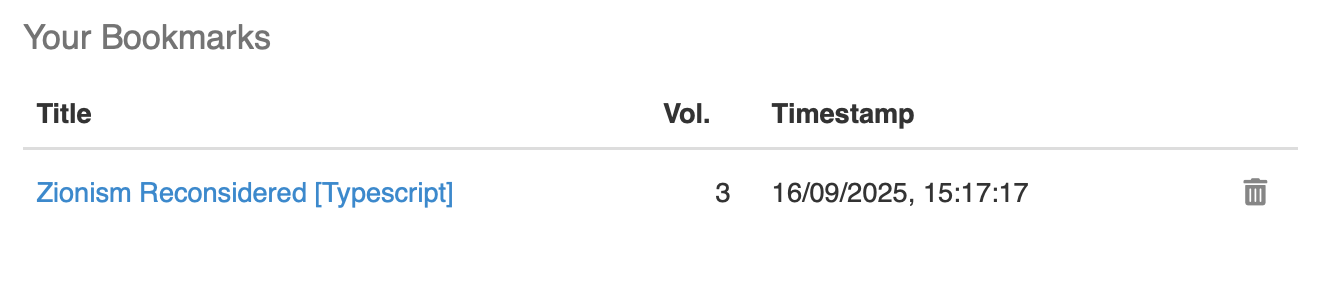
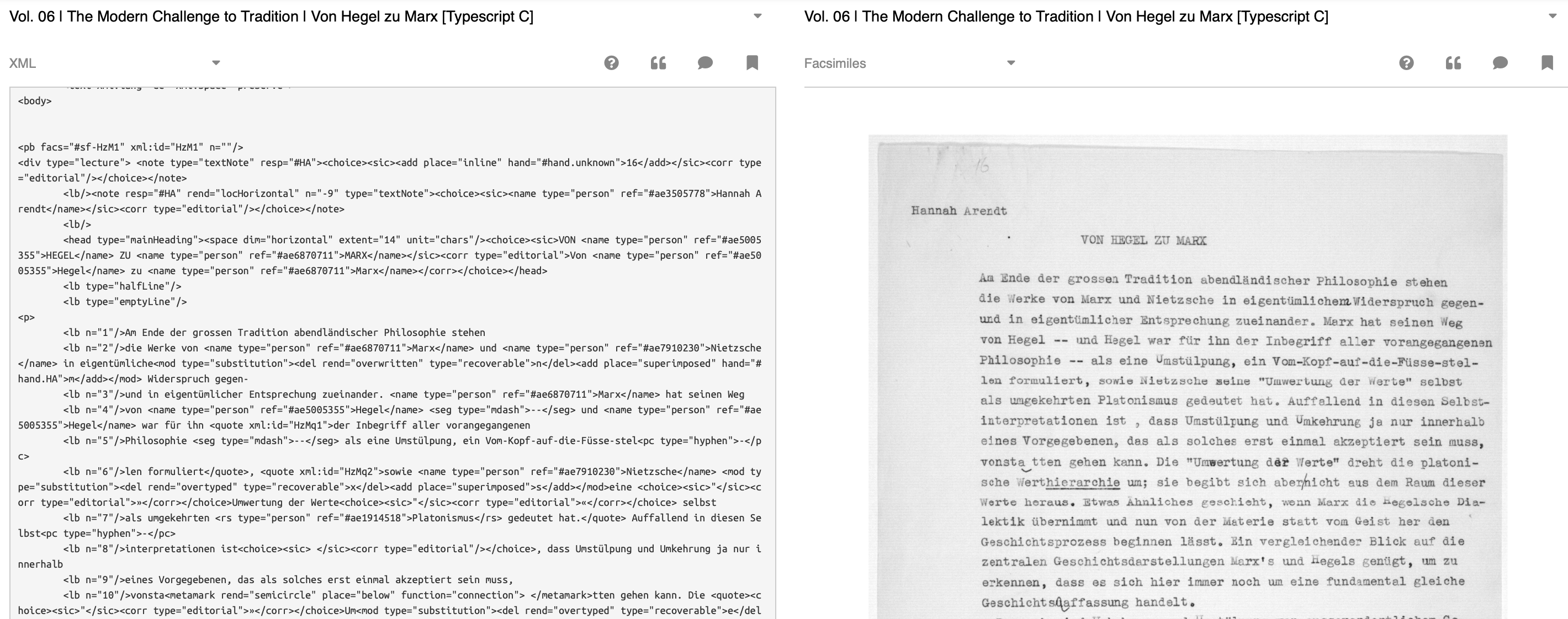
37Alternative formats such as a printable version or formats compatible with specific reading devices (such as e-Book readers or other mobile devices) are not available, and downloading a document is not possible. This limitation is not explicitly explained on the website and it constitutes a disadvantageous point because it limits the accessibility and usability of the content for users who prefer to read offline. To address this issue, the platform could introduce features that allow users to download documents in multiple formats, such as PDF for printing, ePub for e-Readers, and mobile-friendly formats for smartphones and tablets. The advantages of offering alternative formats are considerable. Firstly, they would significantly improve user accessibility by allowing individuals to access the content in their preferred format and on their preferred device. This would cater to a broader audience, including those with limited internet access or a preference for offline reading. Additionally, it could contribute to environmental sustainability by reducing the need for continuous internet connectivity and its associated energy consumption. Overall, this approach would make the critical edition more accessible, versatile, and environmentally conscious.
38HA.CW.CE has a dedicated page addressing rights and licenses, with detailed information available in the “Help” section, particularly on the “Copyright” page. The archive has chosen to implement the CC BY-NC-SA license. This implies that users:
- are permitted to freely share, copy, and redistribute all content on the website, provided they give credit to the authors (BY);
- are restricted from using the material for commercial purposes (NC);
- any adaptation must be shared under the same or a similar license, ensuring a continuous open access for subsequent works (SA).
This choice of license promotes openness and scholarly reuse, while also safeguarding the edition from commercial exploitation.
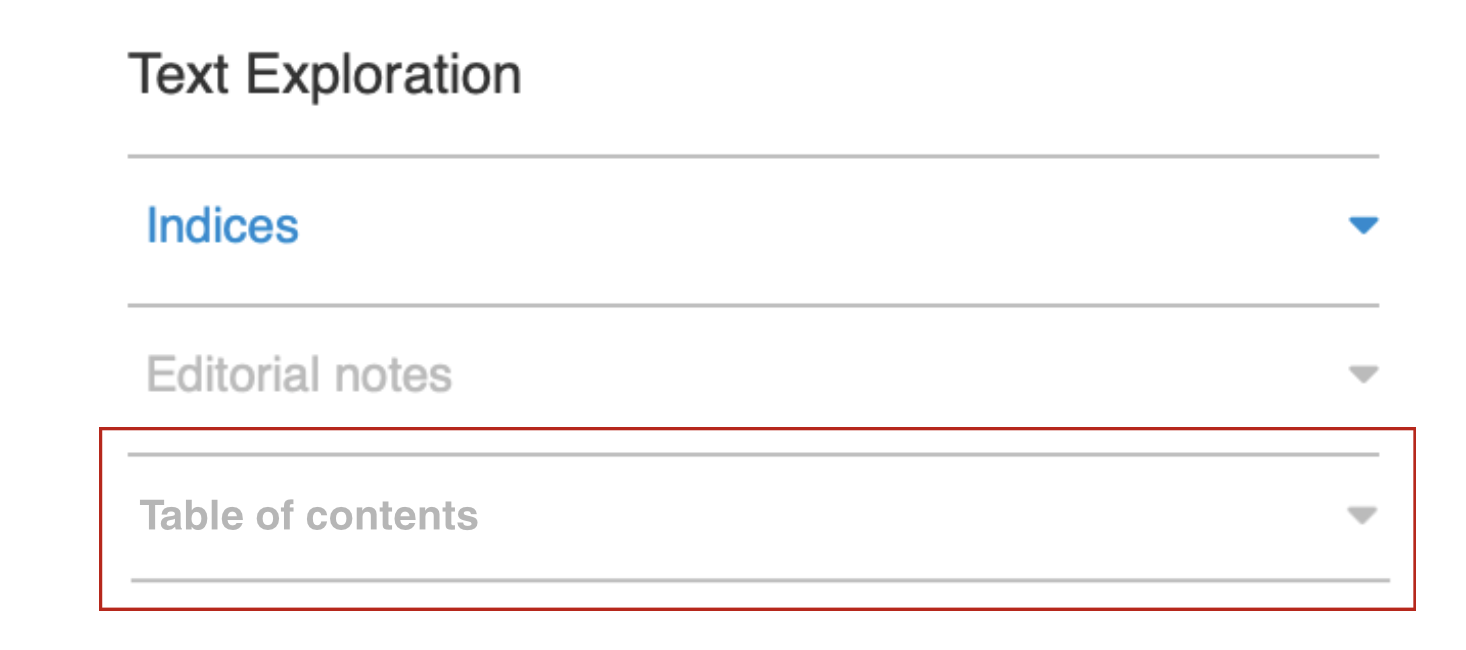
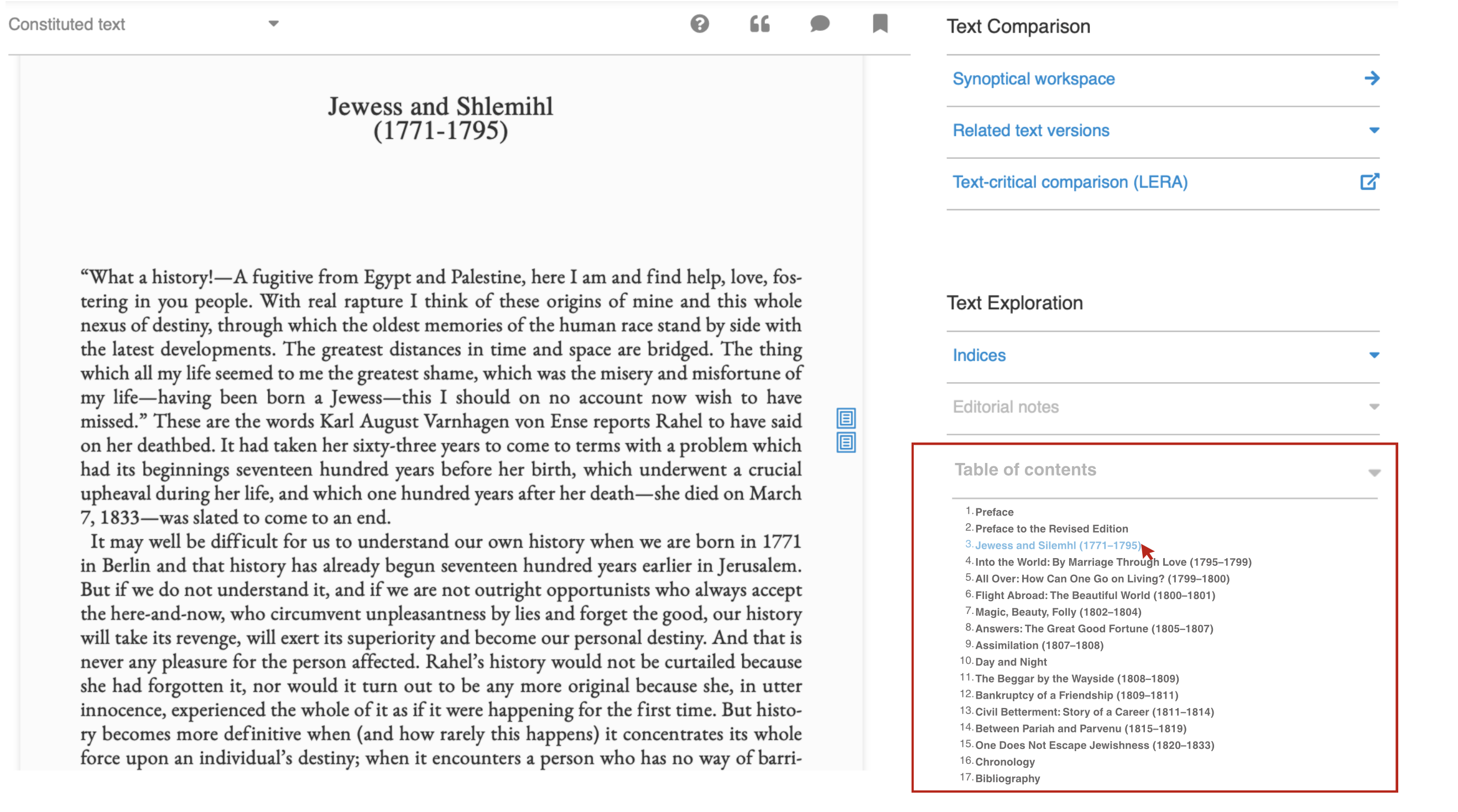
39The documentation of the project sources is detailed in the “About” section, and the original sources of the documents within the database are always cited with their archival reference. Additionally, in the “Publication Schedule” section, there is a tab available to view the schedule of the 17 thematic complexes with dates. One drawback I encountered is the difficulty of navigating through the content without a clear reference index. When a user searches for a specific chapter, they are forced to scroll manually until they find it, which can be frustrating and inefficient, especially in such a large work. This manual search process can slow down the reading experience and reduce the accessibility of the work, creating a barrier for those who need to easily consult specific sections.
Conclusion
41HA.CW.CE can be considered a SDE, if we stick to its definition given by Patrick Sahle in the Criteria for Reviewing SDE (Sahle 2024):
- The critical edition aims to include a complete set of works by Hannah Arendt to ensure accurate representation of works and documents;
- Attention to textual criticism, the integration of facsimiles, diplomatic transcriptions and metadata, together with the use of digital technologies, contributes to creating a critical and accurate representation of writings;
- The edition presents a well-justified editorial approach and sets forth its own rules, which are consistently adhered to.
The critical edition serves as an invaluable source of information about the writer and her work, possessing the necessary credentials in terms of authority and materials. However, to enhance and evolve into a complete and exemplary SDE, several innovations are needed:
- Add a connection to social media for information sharing: Integrating social media allows sharing updates, new discoveries, and developments with a broader community. This not only increases the project’s visibility but also creates a dynamic communication channel with the audience, fostering interaction and participation.
- Improve homepage design: A more dynamic and visually compelling design would significantly improve user engagement and overall accessibility. Introducing a more structured layout could enhance the platform’s appeal.
- Add bibliographic information on Hannah Arendt: Providing an overview of the biography can help users better understand the philosopher’s thought and influences. This adds depth to the critical edition, making it a more comprehensive resource for scholars and enthusiasts.
- Complete missing translation: Ensuring that all sections of the site are fully translated facilitates access to a wider audience. This makes the resource more inclusive and accessible.
- Added Voyant Tools documentation: To improve accessibility and effectiveness, it is crucial to provide detailed documentation on texts that can be analyzed with Voyant Tools (since they are limited). Creating a dedicated section on the edition’s website, with a comprehensive list of titles analyzable with Voyant Tools, would help users better understand which ones are available.
- Allow download of XML-TEI documents: Allowing the download of XML-TEI documents would enable researchers to use their own tools for data analysis and manipulation, ensuring research continuity and preventing data loss in case of platform closure.
- Possible implementation of a notification system for new texts: A notification system would keep users up to date on newly published text in the edition, ensuring a more dynamic experience.
42Two key considerations arise from the evaluation of the digital edition. First, while the edition is currently in its BETA phase, this status does not seem to pose an obstacle to the successful completion of the project. Given the robust foundation and organizational framework in place, it remains reasonable to expect that the edition will be finalized within the projected timeline. Second, the long-term sustainability of the platform and the preservation of the data present critical concerns. The project’s website does not offer clear information regarding the future management of the platform once the editorial work is completed, nor does it address the archiving and long-term preservation of the data. This lack of transparency could undermine the continued accessibility of the edition. Therefore, it would be advantageous for the project to provide more comprehensive information about its strategies for data preservation and the platform’s future maintenance, ensuring ongoing access to the edition after its completion.
43In conclusion, the integration of a printed and digital edition represents a unique opportunity to expand our capabilities. As Leonardo da Vinci wrote:
Oh wonderful science that can preserve the transient beauty of mortals and endow it with a greater permanence than the works of nature; for these are subject to the continuous changes of time leading them towards the inevitable old age! And such a science is in the same relationship with divine nature as its works are with works of nature, and for this it must be worshipped.(da Vinci 2008, 187)
44As we face the transformation of traditional reading into a digital age, it is essential to recognize that this evolution offers new possibilities for exploration and expression. The synergy between printed books and digital formats not only enriches our relationship with literature, but also opens the way to innovations that can broaden our textual understanding. Embracing this duality means not only preserving the richness of the past, but also embracing the potential of the future, creating a dynamic and lasting cultural heritage.
Notes
[1] Her biography was marked by exile from Nazi Germany and the laborious reconstruction of her life in the United States, and her intellectual production that continues to maintain a surprising topicality.
[2] For more information about the team see the “About” section with its subsection “Team”. In addition, institutions with a central role, such as Freie Universität Berlin, Center für Digitale Systeme, and Universität Göttingen, are consistently listed at the bottom of all pages.
[3] For more information see the “About” section and the subsection “Hybrid Edition” on the website of the digital edition.
[4] Internal identifiers and authority identifiers (e.g., GND for people) are used within the edition, but no externally registered persistent identifiers such as DOIs are currently assigned.
[5] In the original version (right), Arendt says that secularism does not mean less faith in the world, but that religious institutions no longer have authority over politics and that politics is no longer legitimized by religion. In the superimposed version (left), Arendt expands the concept by saying that secularism has two meanings: a political and a spiritual one. In particular, she emphasizes that politically secularism means that religions have no binding authority over politics, and that politics is no longer dependent on religion.
[6] For example, in the biography of Rahel Varnhagen. The edition mentions the presence of several versions, including the 1933 Berliner Fassung, the 1957 New Yorker Version and others. In addition, the annotations and references in Arendt’s personal copies, kept at the library of Bard College and the Leo Baeck Institute, are mentioned.
[7] LERA is a web-based collation tool designed to support critical editions by visualizing the evolution of a text over time. For more information, you can access the LERA tool at https://lera.uzi.uni-halle.de/ and read a detailed review of the tool in the RIDE Journal, Issue 11, at https://ride.i-d-e.de/issues/issue-11/web-based-collation-tools/.”
[8] For more information, you can visit https://catview.uzi.uni-halle.de/.
[9] The Library of Congress in Washington, D.C.; the Deutsches Literaturarchiv in Marbach; Bard College in New York.
[10] An open-source web-based platform for textual analysis that allows users to generate visualizations such as word frequency, keyword trends, and co-occurrence patterns. More information and access at: https://voyant-tools.org
[11] Ideologie und Terror is an essay written by Hannah Arendt in which the author analyzes the ideological mechanisms and political violence that characterize totalitarian regimes, particularly those of the 20th century. Arendt focuses on how ideologies, serving a totalitarian power, transform and manipulate reality and how terror is used to maintain control over the population.
[12] Currently a Voyant Tools view is only available for the following texts: Rahel Varnhagen. The Life of a Jewess, The Life of a Jewish Woman; Zionism Reconsidered [Typoskript], [Menorah Journal, 1945]; Von Hegel zu Marx [Typoskript A, B, C], [Transkript der Radiosendung].
[13] For more information, refer to the “Copyright” section.
[14] It explores the life of Rahel Varnhagen, a German Jewish woman from the 18th century, who, despite her bourgeois background, faces the conflict between her Jewish identity and her desire for social integration. Arendt uses Rahel’s story to reflect on themes of identity, social rejection, and the quest for belonging, which resonate with Arendt’s broader reflections on totalitarianism and exile. The work transcends biography, becoming an exploration of the individual’s relationship with society.
[15] A significant citation from the book is: “Not rich, not cultivated and not beautiful that meant that she was entirely without weapons with which to begin the great struggle for recognition in society, for social existence, for a morsel of happiness, for security and an established position in the bourgeois world.” This citation highlights the difficulties of inclusion and the struggle for happiness and security in a world that values and privileges specific traits, shedding light on themes of social exclusion and the search for identity. Themes such as estrangement, marginalization, and the human condition in general are of great importance to Arendt, topics also addressed in works such as The Origins of Totalitarianism and The Human Condition.
[16] I believe it would be helpful to have a graphical representation of the potential solution. For this reason, I have decided to create a prototype.
References
Boella, Laura. 2020. Hannah Arendt: Un umanesimo difficile. Milan: Feltrinelli.
da Vinci, Leonardo. 2008. Quaderni. Oxford: Oxford University Press.
Sahle, Patrick. 2014. Criteria for Reviewing Scholarly Digital Editions, version 1.1. http://web.archive.org/web/20260310155923/https://www.i-d-e.de/publikationen/weitereschriften/criteria-version-1-1/.
Van Mierlo, Wim (2022). “The Scholarly Edition as Digital Experience: Reading, Editing, Curating.” Textual Cultures 15 (1): 117–25. JSTOR. https://www.jstor.org/stable/48687518.
Wilkinson, Mark D. et al. (2016). The FAIR Guiding Principles for scientific data management and stewardship. Scientific Data 3, 160018. https://doi.org/10.1038/sdata.2016.18.
Figures
Fig. 1: Screenshot of the table “Plan of Edition”.
Fig. 2: Screenshot of the Superimpositions tool in The Modern Challenge to Tradition: Religion and Politics [Typescript A].
Fig. 3: Screenshot of a display of multiple versions of a text based on the LERA tool.
Fig. 4: Screenshot of the Timeline.
Fig. 5: Screenshot of the section “Texts”.
Fig. 6: Screenshot of the Voyant Tools applied to Ideologie und Terror
Fig. 7: Screenshot of the homepage.
Fig. 8: Screenshot of the thematic complexes.
Fig. 9: Screenshot of the “Personal Library” section.
Fig. 10: Screenshot of the section “Text”, comparison between XML document and a facsimile.
Fig. 11: Prototype. On the right, you can see the addition of the “Table of Contents” section.
Fig. 12: Prototype. In the “Table of Contents”, when the user clicks on the arrow, a dropdown panel opens with the corresponding chapter (highlighted in blue) and the related text next to it.